
Art is a lonely
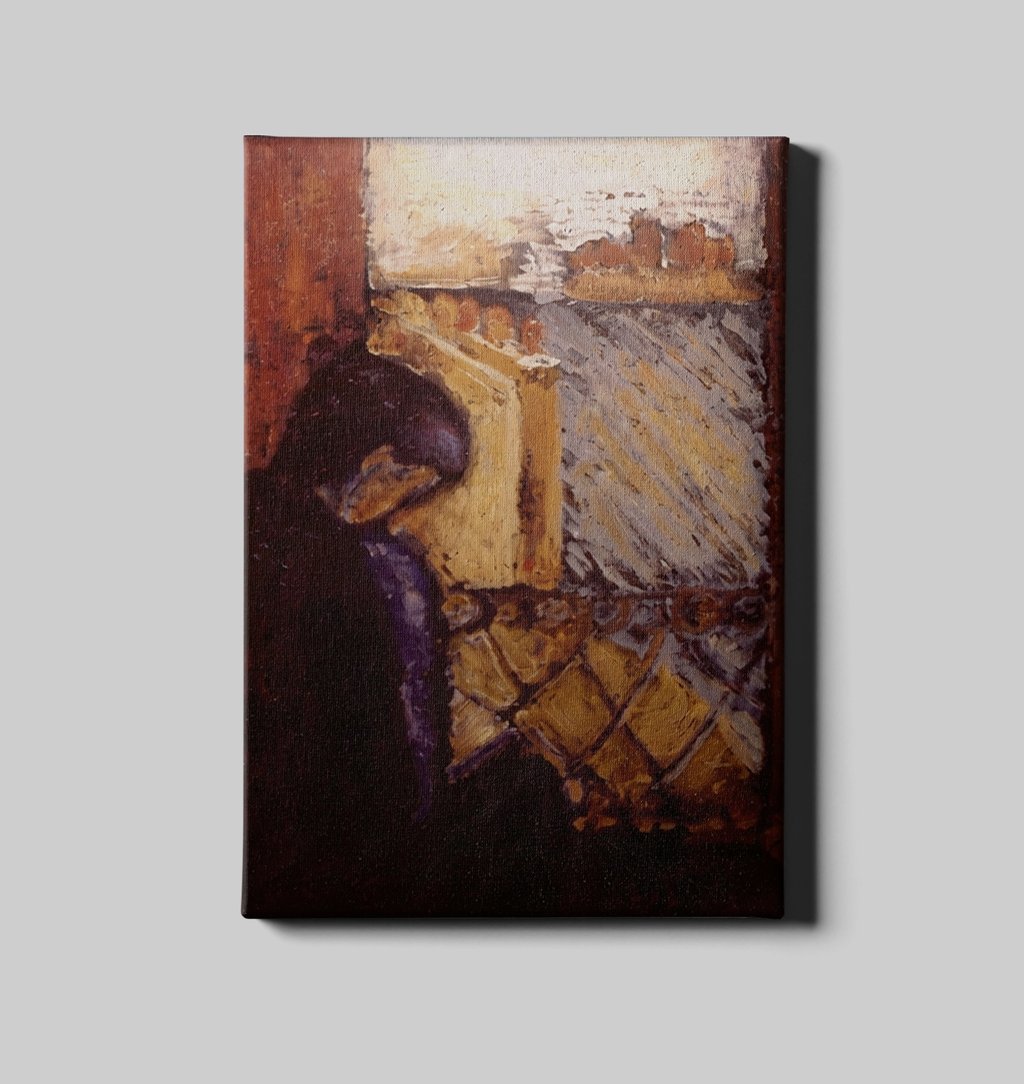
Art is a lonely voyage, like thought. This is what occurs to the traveler who happens upon a room filled with Djina Chemtov's works. One is mindful of the solitude of the artist's enterprise - the solitude of the gaze lost in thought, and of windows. The painting as a window, a window into a window. The painting as the texture and eye of thought. The bright eye of thought that illuminates fields, trees, houses, the endless rooftops of cities. Many of the people in Djina Chemtov's works - although part of the painting - are turned towards the painting itself.but even when they look out, their gaze invites us to look into the world behind them. And soon we are no longer looking at fields, trees, endless rooftops; soon we are pondering the texture of what is depicted. How the painting seems to lean towards the light and greet it, and how it endures against it.That man at the window leaning carefully over the city invites us not to look at, but rather to look into what is before us. It is an invitation to lose ourselves in what is presented to us. The rooftops of Paris, Sofia, Alexandria? No, not the city, not the roofs of the cities, but to lose ourselves in the texture of what is there, the somber texture that greets the flow of light and moves with it persistently. Because there is a persistent unity in these paintings. For no matter how far the artist chooses to travel - how far inwards, how far outwards in theme and content - there is always the return to the same. But there must first be the meanderings of memory, the illusion of differences. This is necessary for there to be a return, for there to be the day - and the light - of the artist's return. To the same window of what is finally a mirror.
And how well Djina Chemtov's persistent craft conveys this. Only long years of lonely endeavor can grant the artist the power and skill to bring such things before us. Look! Trees and houses and a man leaning over the city. Look! But why do we feel compelled to do more than merely look? Why do we want to we want to fall back into the painting? Art is enduring return.
John Monahan
© 2025. All rights reserved.